A hot Triad summer will humble even the toughest plants. In Greensboro, July sun bounces off brick and concrete, humidity clings to your shirt by breakfast, and a patio without shade sits empty until dusk. Smart shade is the difference between a yard that looks good on paper and a landscape that actually gets used. It protects people, cools the soil, and opens up a wider plant palette. When we plan landscaping in Greensboro NC, we think about shade from day one, not as an accessory, but as infrastructure.
I’ve worked through more than a few Greensboro summers, from Lake Jeanette to Lindley Park. The best landscaping comes from matching shade strategies to microclimates and daily habits. Where do you linger with coffee? Where do kids spill out of the back door? Which part of your lawn crisps first when rainfall eases? The answers shape everything from tree placement to fabric choices for a pergola roof.
Below is a seasoned look at shade that fits our climate, soils, and neighborhoods, with practical detail you can use. If you’re comparing options or scouting ideas to talk through with a contractor, this will help you get specific.
Start with the sun you actually have
Spend a week watching light on your property. Note where the sun lands at 9 a.m., noon, and 4 p.m. The Piedmont’s sun rides high in midsummer, then slants low by October. The same corner that bakes in July may feel perfectly lit in March. I keep a cheap thermometer and small notepad handy. The spots that read 10 to 15 degrees cooler under tree canopy are where sitting areas belong. The sledgehammer spots near south-facing walls, which radiate heat into the evening, call for layered shade and heat-tolerant planting.
Typical Greensboro lot patterns offer a few recurring microclimates:
- South-facing back yards with little existing canopy heat up fastest, especially if lawns slope toward the house and reflect. East-facing patios catch gorgeous morning light, then fry midday if there’s no overstory, which can shorten the life of turf and shallow-rooted perennials. North sides of homes stay cooler and may hold moisture longer, inviting shade-friendly plants but also mildew if airflow is poor.
That quick audit tells you where permanent shade structures make sense, and where seasonal or movable shade will do.
Trees: the original air conditioners
Nothing shades like a mature tree. In the Piedmont, a healthy canopy lowers ambient temperature, reduces glare, and drops soil temps enough to preserve moisture. When we plan landscaping Greensboro homeowners can enjoy year-round, we choose tree species that balance shade, roots, and maintenance. Mistakes with trees are the most expensive to fix later, so it pays to think hard before planting.
For broad, reliable canopy in Greensboro’s clay-loam soils, a few species continue to earn their keep:
- Willow oak and shumard oak grow into sturdy shade trees with a clean branching structure. Willow oak drops small leaves that disappear into turf. Shumard tolerates urban conditions and handles intermittent drought once established. American elm cultivars bred for disease resistance, like ‘Princeton’ or ‘Valley Forge’, revive the classic boulevard shade without the heartbreak of Dutch elm disease. They arch beautifully over drives and large patios. Bald cypress surprises people who assume it needs a swamp. In Greensboro, it grows straight and handsome in regular clay soils, tolerating wet periods and summer heat. The canopy is lacy, which dapples light, perfect for mixed borders. Overcup oak and swamp white oak work well in lower, heavier soils. They spread wide and cast a generous radius of shade with decent wind firmness. Littleleaf linden and zelkova offer a finer texture for smaller lots, with predictable form and manageable litter.
Placement matters as much as species. Set large trees 20 to 30 feet from foundations and 10 to 15 feet from patios or decks, allowing room to grow without constant pruning. On a typical quarter-acre lot, two well-placed shade trees can transform useable space within five to eight years, especially if you start with 2.5 to 3 inch caliper stock. Yes, larger specimens cost more upfront, but they leapfrog the awkward adolescent phase. Budget for deep-watering bags the first two summers, then taper watering to encourage deep roots.
Trade-offs deserve mention. Fast growers like silver maple or Bradford pear create quick shade, then cost you later with breakage and expensive removals. Sweetgum is durable, but the spiky balls are no fun around patios. And while we love native pin oak in the right soil, in alkaline pockets it holds brown leaves into winter and can look ragged. Matching species to soil pH and drainage saves grief.
If your goal is afternoon privacy and shade along a fence, consider small understory trees to layer light rather than a single tall canopy. Serviceberry, redbud, and Japanese maple spread elegance without casting deep, gloomy shade. They also support wildlife and provide spring color without hogging space.
Pergolas, arbors, and pavilions that actually cool
Wood structures tend to feel at home in Greensboro’s neighborhoods, whether you lean modern or traditional. The difference between a pergola that bakes and one that cools comes down to roof design, orientation, and materials.
A simple pergola with 2x2 slats spaced widely will filter maybe 20 to 30 percent of sun. That helps in spring and fall, but July rays still land hard. If you want real shade at midday, tighten the spacing, angle the slats to intercept the high sun path, or add a secondary layer. In our climate, I often specify a tensioned shade cloth on top of a wood frame. Good fabrics block 80 to 95 percent of UV while breathing, which reduces heat buildup under the structure. Lighter colors reflect heat better than deep charcoal, though darker fabric can reduce glare.
For rain protection and deeper shade, step up to a pavilion or a pergola with a standing-seam metal roof. Metal sheds heat faster than shingles after a quick shower, and the clean lines suit both farmhouse and contemporary styles. If you place a solid-roof pavilion west of a main living area, keep the roof pitch and height proportionate to the house so you don’t turn windows into permanent twilight. Aim to shade the hardscape, not the entire rear elevation.
Anchoring matters. Heavy timber looks great, but if post bases sit on thin pavers, frost heave and time will skew everything. We core footers below frost depth and integrate with the slab or pier. In neighborhoods with strong winds, we add concealed steel brackets and through-bolts, not just lag screws. The structure should shrug off a thunderstorm.
Vines on a pergola cool more than any fabric. Foliage transpires, which lowers air temperature. In Greensboro, crossvine and native trumpet honeysuckle climb willingly and draw pollinators without choking the structure. Wisteria looks like a dream for five years, then becomes a lifelong pruning project. If you love it, choose a named Asian hybrid and commit to monthly reductions. Native wisteria is gentler but slower. For edible shade, muscadine grapes are happy in our heat and reward you in late summer.
Shade sails and retractables: flexible tools for tough corners
Contemporary homes, small urban lots, and tricky patios benefit from shade sails and retractable awnings. Done well, a sail looks crisp and throws deep, angled shade. Done poorly, it sags, pools water, and flaps itself to death.
I prefer triangular sails mounted with stainless hardware to substantial posts or house ledger points. Pre-tension is everything. A 10 to 12 percent catenary curve along the edges tightens the fabric, sheds water, and resists wind. Install at varying heights to sculpt shade: high on the south, low on the west. Use commercial-grade HDPE fabric with a UV warranty. Cheaper polyester fades and can tear after a season or two. In areas with mature oaks, plan to drop sails before fall storms to avoid branch damage.
Retractable awnings earn their keep over south or west-facing doors. The good ones handle a light drizzle and are motorized with wind sensors, so they auto-retract during gusts. If you grill under one, maintain safe clearance and consider a heat-resistant valance. Match color to house trim or deck boards rather than a bold stripe unless you want the awning to be the star year-round.
For rental properties or quick fixes, freestanding cantilever umbrellas fill a gap. They rotate to chase shade and tuck away in winter. Just weigh the base properly and check locks before storms.
Living shade: hedges, screens, and groundcovers
Not every shade solution has to loom above your head. Hedges and layered planting create cool corridors and pockets where air moves and people relax. A hedge on the west side of a patio acts like a shade wall as the sun drops. In Greensboro’s zone 7b to 8a conditions, a few plants stand out for living shade and screening:
- Hollies like ‘Nellie R. Stevens’ or ‘Oak Leaf’ handle heat, keep color year-round, and offer berries for birds. They take pruning well, but leave room to grow so you don’t shear them into stress. Camellia sasanqua thrives in morning sun and afternoon shade. It blooms when little else does and filters light beautifully along fences. Tea olive (Osmanthus fragrans) brings fragrance and a fine texture. It can reach 10 to 12 feet in a handful of years with minimal fuss. Anise shrub (Illicium parviflorum) is underused, tolerates our humidity, and makes dense, aromatic screens in part shade.
Underfoot, don’t overlook the cooling power of groundcovers. Large swaths of mondo grass or shade-tolerant sedges drop reflected heat more than bare mulch. In deep shade beneath oaks, a matrix of ferns, hellebores, and autumn fern stabilizes soil and stays handsome in our winters.
If your lawn struggles under trees, accept it. Swap thin turf for a shade garden and a crushed granite or brick landscaping greensboro chip path. You’ll use the space more. Greensboro’s red clay drains slowly, so a 2 to 3 inch layer of aggregate over a compacted base makes a clean, cool walkway that sheds water.
Hardscape that doesn’t radiate heat
Material choice changes how a space feels at 3 p.m. on a July Saturday. Dark pavers and solid concrete soak up heat and radiate it into evening. If you want a patio you can walk barefoot across, choose lighter stones and open joint patterns.
Flagstone set in sand with planted joints allows small ferns, mazus, or dwarf mondo to weave through, softening glare and reflecting less energy. Permeable pavers help, too. Water moves through, evaporates, and cools the surface. In high-traffic areas, we often use a mix: a denser paver field for the dining zone, then an open-joint apron that transitions to planting. Under a pavilion, I’ll specify porcelain pavers over a pedestal system for a clean, cool surface that hoses off easily after a thunderstorm. Porcelain doesn’t hold heat like concrete, and it resists staining from pine pollen.
Add vertical shade with a trellis near heat sources. A lattice panel on the west side of a grill island reduces late-day glare and makes cooking bearable. Cedar takes stain well and holds fasteners without splitting, which matters when you hang planters or attach hardware.
Water and airflow: the quiet shade multipliers
Shade alone cools. Shade plus movement and moisture changes the experience. A ceiling fan under a pavilion extends use by several hours each day. Look for outdoor-rated fans with sealed motors. Wire them to a wall switch with variable speed, not just a pull chain, so you actually use them.
Water features do not have to be grand. A narrow rill or 3 by 5 foot pondless basin near seating audibly cools the space and drops surface temps a few degrees in the immediate vicinity. In Greensboro’s heat, shallow water warms quickly, so keep it shaded and moving to avoid algae and mosquitoes. A 1,000 to 1,500 gallon-per-hour pump is plenty for a small patio feature. Clean the filter every few weeks in summer.
Misters can be magic for short stints, especially on brick courtyards that store heat. Install high-quality nozzles that produce fine droplets, and keep them out of prevailing wind. Expect to turn them on for 15 to 20 minutes, not an entire afternoon. They pair well with a fan set on low, moving the cool air where people sit.
Plant palettes for light, dapple, and deep shade
Greensboro offers a wide spectrum of light, sometimes within ten feet. The smartest beds layer plants that embrace variation rather than fight it. In high shade beneath large oaks or elms, I lean on texture: glossy leaves, matte leaves, fine needles, and big paddles. Hostas get the press, but they’re slug candy and can sulk in heat. Mix them sparingly with tougher stalwarts.
Consider Japanese forest grass near paths, where its chartreuse leaves glow in low light. Pair with autumn fern, hellebore, and Ajuga for ground-level interest. Add evergreen structure with distylium or ‘Soft Caress’ mahonia. For flowers, pokeweed’s native relatives are gorgeous but can sprawl; instead try foxglove in spring, then caladiums for summer color if you can commit to lifting bulbs or treating them as annuals.
In dappled light, hydrangeas excel, but choose with intent. Panicle hydrangeas handle more sun and heat with less sulk than bigleaf types. Oakleaf hydrangeas shine in part shade and bring fall color and peeling bark that glows in winter light. Tuck them where late-day sun rakes through the leaves and you’ll get that lit-from-within look around supper time.
Edge cases deserve planning. North walls can grow mossy, and deck undersides can trap humidity. Give plants a bit of breathing room away from solid walls. If you must plant close, choose species that like airless pockets, such as cast iron plant and aspidistra. They shrug off neglect, pets, and the occasional soccer ball.
Maintenance realities: pruning, gutters, and grit
Shade is not set-it-and-forget-it. Trees look after people when people look after trees. Every two to three years, a qualified arborist should inspect major canopy, clear deadwood, and lift branches away from roofs. A half-day of preventive work can save a roof or fence in a thunderstorm. Avoid lion-tailing, where crews strip inner branches and leave tufts at the ends. That invites breakage.
If you run fabric over a pergola, plan to clean pollen twice each spring. Greensboro’s pine season dusts everything chartreuse. A soft brush and hose do the job. Retractable awnings need a rinse and a quick hardware check before and after summer. Shade sails warrant a once-a-season tension check; fabric stretches slightly with heat cycles.
Plants under deep shade don’t need much fertilizer. In fact, pushing growth increases disease. Feed lightly with a slow-release, keep mulch at 2 inches, and never pile mulch against trunks. Renew gravel joints annually where leaves and soil creep, or tiny weeds will colonize and break the clean look.
Most important, keep water in the ground where plants can use it. Downspouts that blast soil under a tree undo your best work. Tie downspouts into drains or splash blocks that steer water to rain gardens. In red clay, a 6 to 8 inch-deep amended basin planted with moisture-tolerant natives turns stormwater into a cooling asset. Blue flag iris, swamp milkweed, and soft rush are happy there, and they bring life to the garden.
Budgeting for shade: what delivers the most per dollar
Clients often ask where to put the first dollars if they want usable shade fast without overspending. You have three levers: time, permanence, and flexibility.
Planting one or two substantial shade trees is the best long-term value. Expect to invest a few thousand dollars for quality stock and professional installation, more for very large specimens. You’ll feel the difference within three summers, and the benefits only grow.
For immediate relief over a patio, a tensioned shade sail installed properly lands in a mid-range budget and gives dramatic results. It also lets you test where you want permanent shade before pouring footers for a pavilion.
A wood pergola with a good shade cloth is a strong middle ground. It looks finished, expands your plant options, and can be upgraded later with a solid roof when budget allows. If you go straight to a pavilion, plan electrical and drainage concurrently so you’re not cutting into new work later.
Cheapest quick fix, if you need something this weekend: a quality cantilever umbrella and a re-think of furniture placement to chase the shade you already have. Move seating six feet to catch the shadow of a tree trunk or the house at certain hours, then adjust your planting plan to reinforce that pattern.
Neighborhood character and HOA realities
Greensboro neighborhoods vary, and so do the rules. In some newer communities, shade sails or tall hedges may require approval. Historic districts care about sight lines and materials, which affects pergola design and roofing. If you’re in an area with mature canopy, neighbors will thank you for choosing species that complement the streetscape and avoid nuisance litter.
Noise carries under hard roofs, so think about the home next door. A fan under your pavilion runs quieter than a Bluetooth speaker pointed at the fence. Plant a loose evergreen screen where your entertaining zone faces a bedroom window across the property line. Thoughtful landscaping in Greensboro builds goodwill along with beauty.
A real-world mix that works
A favorite project near Sunset Hills started as a hot rectangle of concrete behind a 1960s ranch. The owner wanted breakfast shade, a cool spot after work, and planting that looked alive in February.
We removed half the concrete and installed a 12 by 16 foot cedar pergola oriented east-west. On top, a tan 90 percent shade cloth. We set two 3 inch caliper willow oaks 25 feet off the patio corners, staked carefully and watered with bags for the first two summers. Under the pergola went porcelain pavers over pedestals, which feel cool even in sun leaks. An 8-foot cedar lattice panel on the west side catches late sun and gives climbing space for native honeysuckle.
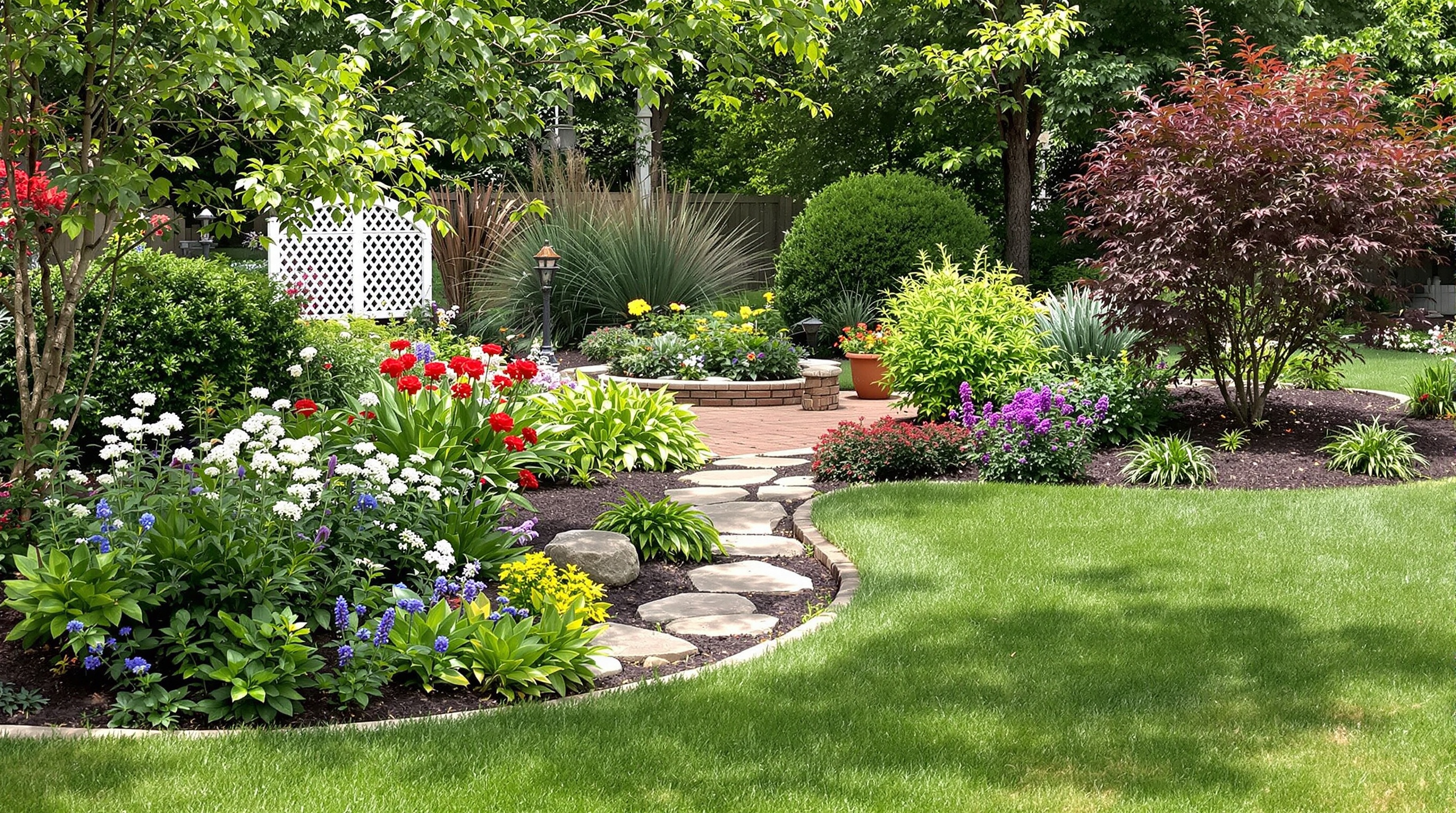
At ground level, an open-joint apron of irregular flagstone planted with dwarf mondo transitions to a bed of oakleaf hydrangeas, autumn fern, and hellebores. Along the fence, a staggered tea olive and camellia run filters afternoon glare. A small rill, 10 inches wide, spans ten feet near the seating, fed by a 1,200 gph pump. A single outdoor-rated fan under the pergola turns lazy air into a soft breeze. The total project stretched over two seasons to spread cost. By year three, morning coffee belongs under the pergola, and by 5 p.m., the willow oaks cast enough shade that the lawn needs half the water it did the first summer.
That blend of structural shade, living canopy, and cool materials is exactly what makes the best landscaping in Greensboro NC feel effortless on a humid day.
Choosing a partner who speaks shade
If you bring in help, ask pointed questions. How will this structure handle our frequent summer storms? What’s the plan for drainage around footers? Which tree cultivars do you warranty, and for how long? Where will shade fall in July at 3 p.m., and how did you model it? A professional who handles landscaping in Greensboro NC should talk about clay soils, pollen season, and wind exposure without prompting. They should also speak honestly about maintenance. If a design relies on monthly vine pruning and you travel, ask for a lower-maintenance option.
More than once, a client has asked for “something dramatic.” Dramatic is easy. Livable is harder and better. Shade earns its keep when the temperature spikes and the urge to stay indoors is strong. With the right mix, you step outside anyway.
Seasonal tweaks and small wins
You don’t have to renovate the entire yard to feel cooler this summer. A few targeted moves can change how you use the space, and they play nicely with bigger plans later.
- Swap solid cushions and dark tabletops for lighter, breathable fabrics and materials. Shade works better when surfaces don’t radiate heat back at you. Add a temporary sail from house fascia to two movable posts, then chart where shade falls each hour. Use chalk or flags. That map will tell you the best orientation for a future pergola or pavilion. Plant two quick, honest performers near seating: a large container of papyrus or umbrella sedge, and a clump of Japanese forest grass. Both wiggle in the slightest breeze and cool the eye. Move your grill out of the dead center of the patio. Heat stacks under roofs and drives people away. Give it a dedicated landing pad with airflow, and the rest of the space suddenly feels usable. Install a simple dimmable light under existing shade. Evening becomes prime time, and you stop chasing the last scraps of sun protection.
Small wins add up, and they teach you how you actually live outside, not how a plan on paper imagined you would.
The Greensboro advantage
Our city sits in a sweet spot. We have real seasons, but winters are gentle enough that evergreen structure carries the garden, and summers are long enough to justify every minute spent creating shade. The soil asks for patience and smart amendments, not endless coddling. And the palette of plants that thrive in filtered light here is broad and interesting.
When people look for landscaping greensboro professionals who understand shade, they want craft, but also judgment. A good plan starts with sun paths and daily patterns, then it layers trees, structures, and materials so they support each other. It makes the yard cooler without feeling dim. It leaves room for growth and for change. Most of all, it gives you places to sit, talk, read, and eat outside even when the cicadas scream and the thermometer dares you to stay in. That is the real test of shade, and the truest mark of a landscape built for Greensboro.